How to choose a doctor blade for flexo and gravure printing in Pakistan
Carbon steel or stainless? Coated, Nano or plain? Which edge profile? This guide goes through the choices in the order they matter, so you can match a blade to your ink, your press and your run length before you order.
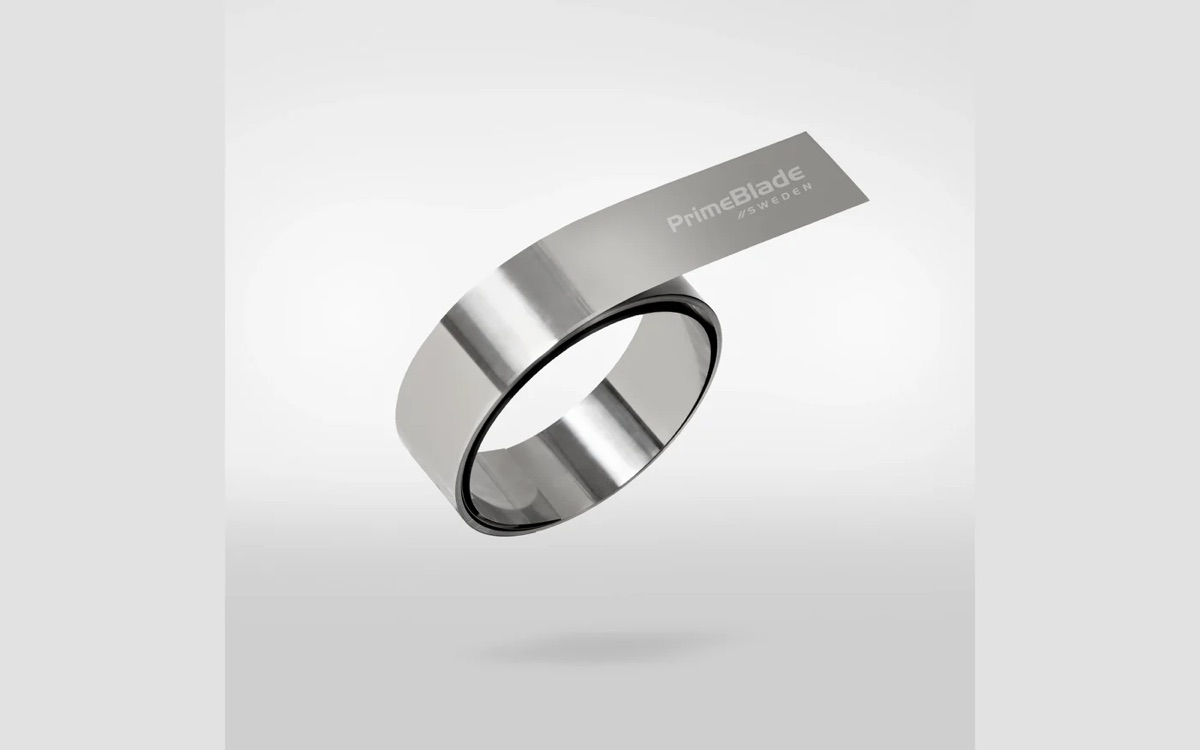
The doctor blade is the part that decides how much ink stays in the anilox cell and how much is wiped away. Its edge, its hardness and its straightness show up directly in the print. It is also a consumable, so the same choice is made again with every order. Getting it right once saves that decision every time after.
Start with the ink, not the blade
Three facts about the job decide most of the specification.
Which ink system? Water-based, solvent-based and UV inks treat steel differently. With water-based inks, corrosion is the first thing to settle. That points to a stainless grade.
How abrasive is the ink? Abrasive inks wear the edge faster. They call for a grade or a surface treatment built for wear resistance.
How long is the run? Long-run work rewards a blade built for lifetime, because it means fewer blade changes.
Which steel grade for which job
PrimeBlade makes six steel grades and publishes the figures for each one. This is how they divide, in PrimeBlade’s own descriptions.
| Grade | What it is | Choose it when |
|---|---|---|
| PrimeBlade 300 | Basic high quality carbon steel, 590 HV | You want a general-purpose blade with good wear resistance |
| PrimeBlade 400 | The most corrosion resistant grade, with chromium and molybdenum | Blade corrosion is your main issue |
| PrimeBlade 500 | Standard martensitic stainless steel, up to 600 HV | You run water-based inks |
| PrimeBlade 600 | The finest carbon steel in the range, up to 630 HV | You want higher print quality and blade lifetime, with less risk of metal hair and burr |
| PrimeBlade 700 | Coated blade, 850–900 HV on the coated surface | You run abrasive inks, water or solvent based, and want reduced friction |
| PrimeBlade 800 | Tool steel with molybdenum and vanadium, 650 HV | Wear resistance comes first, with abrasive inks |
Descriptions and hardness figures as published by PrimeBlade. The full table, with thickness, tensile strength, straightness and steel composition per grade, is on our Swedish steel doctor blades page.
Coated or Nano, for long runs
Two routes lead to a longer-lasting edge. The 700 series is a coated blade: PrimeBlade bonds a coating to the steel, which it says gives the highest level of wear resistance and a clean, smooth wipe.
The 900 Nano series takes the other route. A patented surface treatment changes the steel itself to reduce wear and extend lifetime. PrimeBlade describes the process as environmentally friendly and free from the hazardous chemicals typically used to produce coated blades. Nano blades come on three different premium Swedish steels.
The edge profile matters as much as the steel
Two blades in the same steel and the same thickness behave completely differently depending on how the edge is ground. The profile sets the contact area against the roller, the friction, and whether that contact area stays constant as the blade wears.
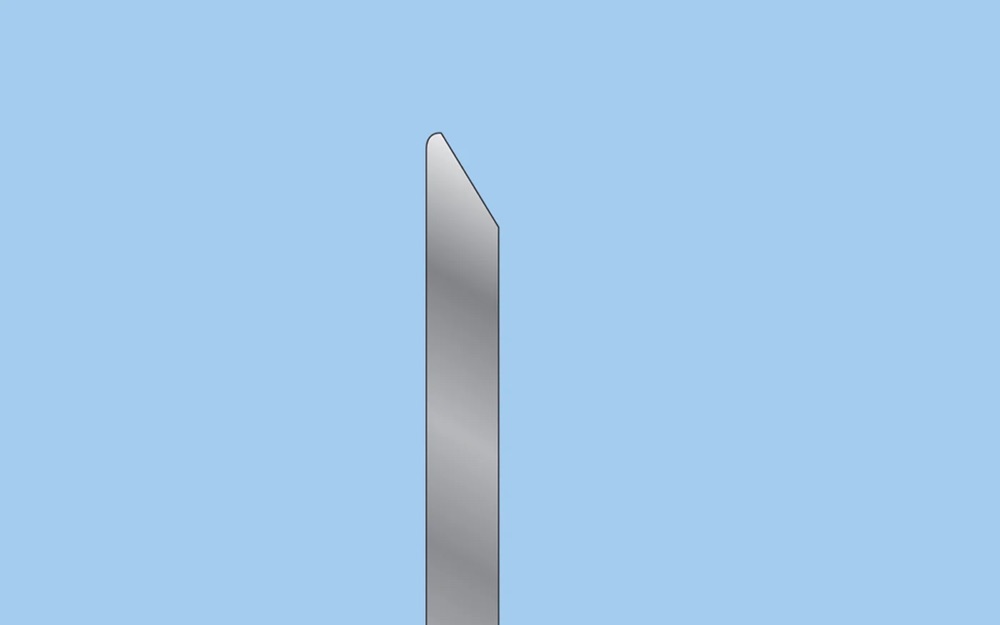
- Profile 50 is the most commonly used edge today in both flexo and gravure. Its contact area stays constant during wear, with lower friction and wear against the roller.
- Profile 25 has a double-sided radius edge with polished ends, for instant run-in and a good seal against the roller. It is used in flexo, gravure, lamination and coating.
- Profile 10 is a bevel edge, mostly used in coating but also in gravure and flexo. It wipes well until the contact zone becomes too large.
The standard dimensions and bevel angles are on the blade edge profiles page.
In a chamber system, not every blade wipes
Not every blade in a chamber system is doing the wiping. The containment blade seals the chamber, and steel is the wrong tool for that job: a polymer blade holds the seal without wearing the anilox. PrimeBlade’s 100 series covers polyester and UHMW containment blades for flexo chamber systems.
The chamber is also only as good as its end seals. When they leak or drag, you get ink on the floor and heat at the seal face. Chamber end seals come in different materials for different inks, speeds and chamber designs, so the seal should be chosen with the blade, not after it.
Comparing blades from different makers
If you are comparing PrimeBlade with another make, such as Daetwyler’s MDC blades or TKM, compare on figures rather than adjectives. Ask every supplier for the same five things for the grade they propose:
- The chemical composition of the steel
- The hardness, in HV
- The tensile strength
- The straightness tolerance over the blade length
- The thicknesses and edge profiles it is available in
PrimeBlade publishes all of these for every grade, which is why we can put them in one table. A blade that cannot be compared on these numbers can only be judged by running it.
What decides the price
We do not publish prices. Doctor blades are sized and specified per press, so the cost follows the specification. What moves it:
- The grade. Carbon steel, stainless, tool steel, coated and Nano blades are different products.
- Thickness, width and edge profile. These follow your press and your process.
- How it is supplied. In coil, or cut to the length of your chamber or blade holder.
- How much you use. Blades are a repeat purchase, so the order pattern matters as much as the first order.
What to send us
With these points we can specify the grade, thickness and edge profile:
- The process: flexo, gravure, offset lacquering or coating
- The press, and whether it runs a chamber system
- The ink system: water-based, solvent-based or UV
- The anilox or cylinder the blade runs against
- The blade you use now: width, thickness and edge, if you know them
- What you want to change: blade life, print quality, corrosion or wear on the roller
Frequently asked questions
What does a doctor blade do?
It wipes the surplus ink from the anilox roller in flexo, or from the cylinder in gravure, so that only the ink in the cells is carried to the print. It decides how much ink stays in the cell and how much is wiped away.
Which doctor blade is best for water-based inks?
A stainless grade. PrimeBlade describes its 500 grade as having excellent performance for water-based inks with very good corrosion resistance. Where corrosion is the main problem, the 400 grade is its most corrosion resistant blade.
Which doctor blade lasts longest with abrasive inks?
PrimeBlade points to three options for abrasive inks: the 800 tool steel grade for wear resistance, the coated 700 series, and the 900 Nano series, whose surface treatment reduces wear.
Steel or polymer doctor blade?
Steel for the blade that wipes. Polymer for the containment blade that seals a flexo chamber, because it holds the seal without wearing the anilox.
Which edge profile is most common?
Profile 50, in both flexo and gravure, because its contact area stays constant as the blade wears.
Who supplies PrimeBlade doctor blades in Pakistan?
K Group of Companies, Karachi, is the appointed distributor for PrimeBlade (Sweden) in Pakistan, listed on PrimeBlade’s own distributor network as Intercom Trade Services (Pvt) Ltd, a K Group company. We specify the grade and profile, size and cut the blades, select chamber seals and handle repeat supply for customers all over Pakistan.
Last updated:
Sources
- PrimeBlade Sweden product information as published on kgroup.com.pk/pages/principals/primeblade
- K Group, flexo printing machines and rotogravure printing machines in Pakistan