How to choose a plastic shredder or recycling machine in Pakistan
Shredder, crusher or granulator? A machine at the production line, or a full washing line? This guide walks through the questions we ask every customer before giving a budget indication, so you can size the right machine for your plastic waste before you talk to anyone.
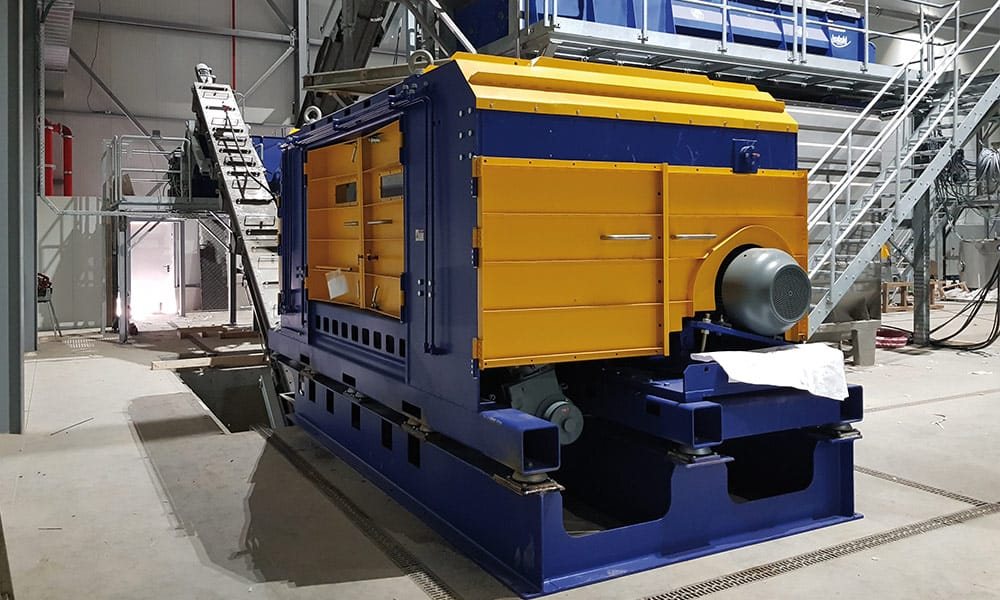
Most enquiries we receive in Pakistan start with the words “plastic crusher”. Behind that one phrase sit three different machines and at least two different jobs, and the wrong choice is expensive either way: a machine that cannot take what you feed it, or a machine built for a problem you do not have. This guide sorts that out in the order we do it on the phone.
Start with the waste, not the machine
Three facts decide almost everything, and none of them is the polymer.
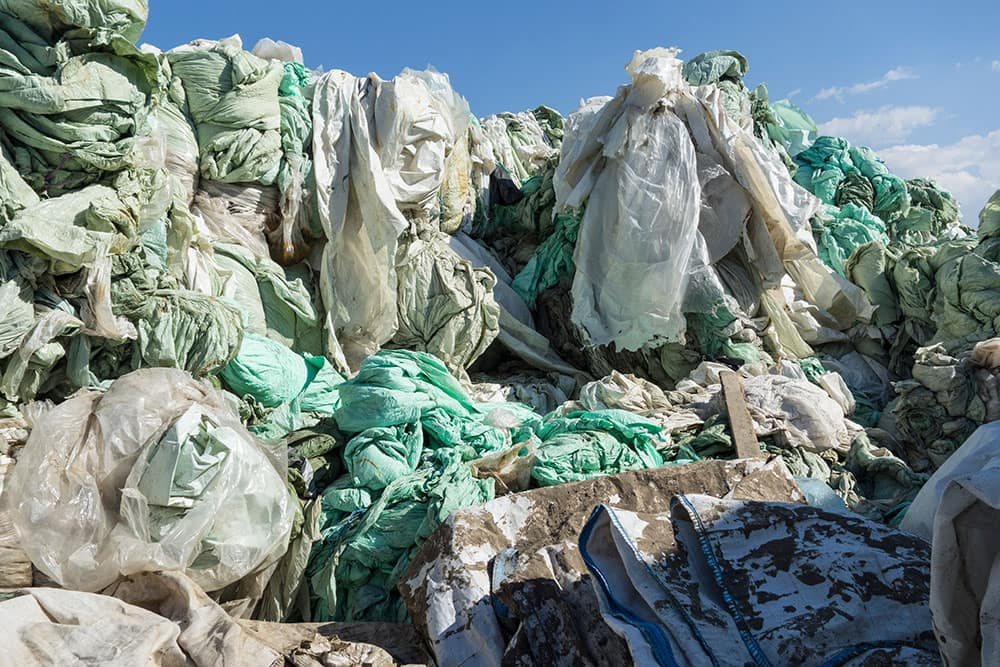
What form does it arrive in? Baled post-consumer film, start-up lumps from an extruder, rejected mouldings, pipe offcuts, edge trim on cores and full reject rolls all load a rotor differently. The same PE in two forms can point at two different machines.
How dirty is it? Clean scrap from your own production is undemanding. Post-consumer material carries sand, stone, metal and moisture. That changes the cutter steel, the screen, the bearings and what has to sit upstream to protect the rotor — it is a different machine, not an option on the same one.
What happens to the output? A shredder feeding a washing line has a different job from one feeding a granulator or an extruder. The downstream machine sets the output size, not the shredder. If your goal is pellets you can put straight back into production, the answer may be one machine that shreds and extrudes together rather than two.
Shredder, crusher or granulator?
In Pakistan the word “crusher” is used for both, so it is worth being precise.
A shredder runs slowly with high torque. It takes material that is too big, too thick or too awkward for anything else and reduces it to a coarse, conveyable fraction. It survives contamination and uneven input. What comes out is not yet regrind.
A granulator runs fast and cuts to a controlled particle size through a screen. It gives you regrind you can feed to an extruder or moulding machine, but it is far less tolerant of what you put in. Ask a granulator to swallow a bale and it stalls; ask a shredder for a fine, even particle and you get the wrong tool.
Many plants need both, in sequence: shredder first, granulator second. Where floor space is short, a combined shredder-granulator does both jobs in one housing.
Two very different situations
1. Clean production scrap: recycle it at the machine
If your waste is your own — film edge trim, start-up lumps, rejected parts, offcuts — the cheapest answer is usually not a crusher at all but a compact machine that turns scrap straight back into pellets next to the line that made it. NGR’s A:GRAN takes start-up lumps and industrial scrap without pre-grinding, at up to 120 kg/h according to NGR; the E:GRAN does the same for film edge trim and roll scrap, dust-free, installed in the production hall. Both shred, feed and extrude in one step, so what leaves the machine is regranulate you can use the same day.
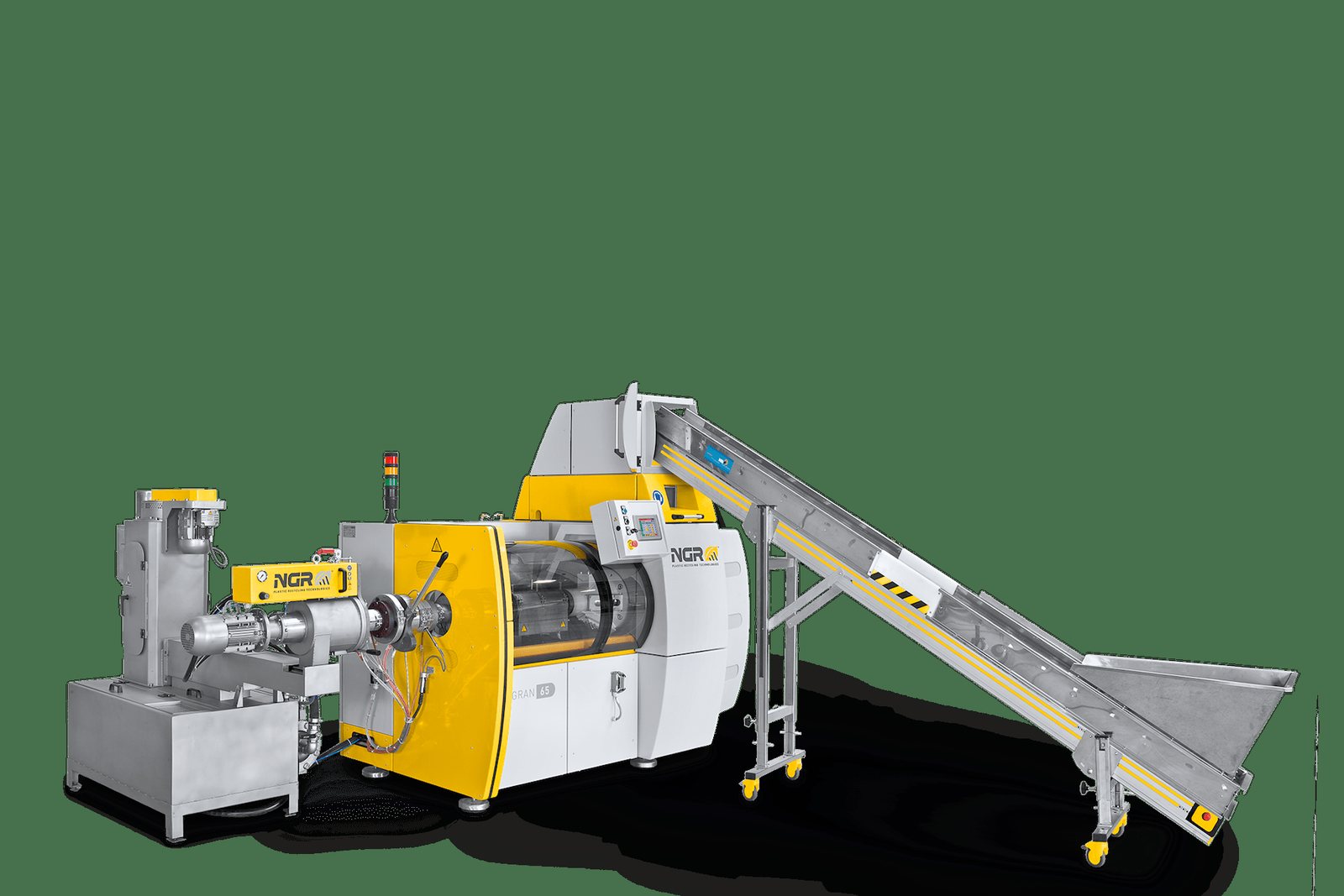
At larger volumes the same principle scales up: NGR’s S:GRAN shredder-feeder-extruder handles up to 900 kg/h of industrial scrap, by NGR’s figures.
2. Post-consumer or mixed waste: build a line
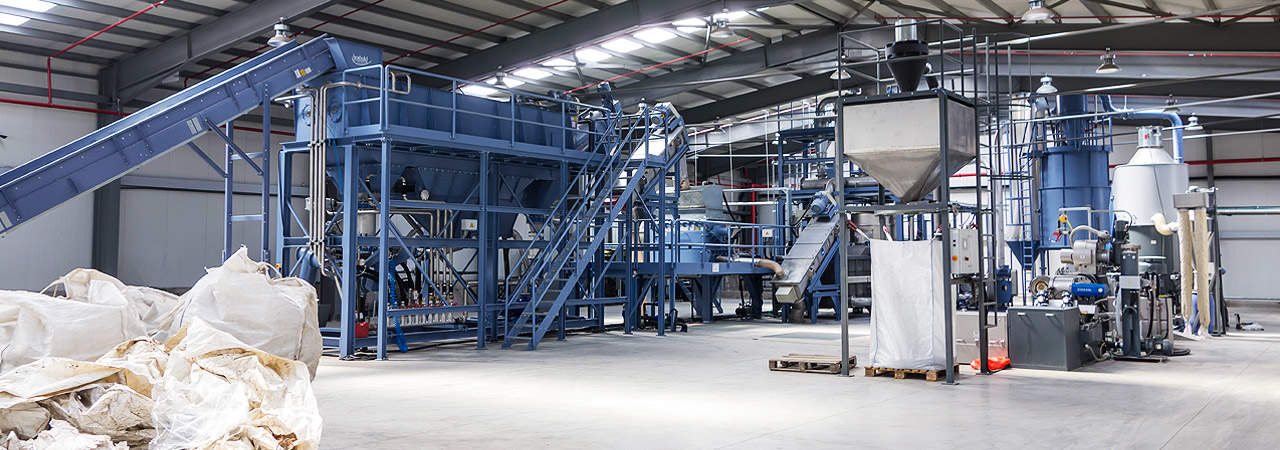
Bought-in waste — bales of film, bottles, crates, agricultural film, woven bags — is a different business. It needs a pre-cut or shredding stage, then washing, separating and drying, then granulating or extruding. Herbold builds the whole chain: EWS and DWS shredders at the front, the HGS guillotine for full bales and large pipe that no shredder throat will take, complete washing lines in the middle, and SMS heavy-duty granulators at the end. For wet, contaminated material NGR’s C:GRAN takes moisture up to 12 percent, by NGR’s figures, straight into the extruder.
Which machine for which job
| Your situation | What you need | Example |
|---|---|---|
| Film edge trim and roll scrap from your own extruder or printer | Compact shredder-extruder at the line | NGR E:GRAN |
| Start-up lumps, rejected mouldings, production offcuts | Shredder-feeder-extruder, no pre-grinding | NGR A:GRAN, S:GRAN at volume |
| Bulky, thick-walled parts, pipe, drums | Single-shaft shredder with hydraulic ram | Herbold EWS |
| Mixed, awkward input of varied shapes | Double-shaft shredder, low speed | Herbold DWS |
| Clean regrind to a set particle size | Granulator (after a shredder if input is bulky) | Herbold SML, SMS |
| Shredding and granulating with little floor space | Combined shredder-granulator | Herbold HGM |
| Baled post-consumer film, bottles, woven bags | Shredder, washing line, granulator or extruder | Herbold line; NGR C:GRAN for wet input |
| Full bales or large pipe that will not fit any throat | Pre-cutting stage before the shredder | Herbold HGS guillotine |
Throughputs quoted by NGR and Herbold for standard materials; actual figures depend on the material and its condition.
What decides the price
We do not publish prices, because a shredder is not a catalogue item: two plants asking for “a plastic shredder” can be quoted very differently. What we can say is what moves the number, so you can set a budget before asking.
- Rotor design and shaft count set the starting point. Single-shaft with ram, double-shaft, or a combined shredder-granulator are three different builds.
- Contamination drives the specification harder than most buyers expect. Post-consumer material means tougher cutters, heavier bearings and protection upstream and downstream.
- Output size and throughput pull against each other. A finer, tighter particle at the same tonnage means a smaller screen and more work per kilogram.
- Ancillaries are routinely underestimated: infeed conveyors and hoppers, metal detection and magnets, extraction, and the washing line or granulator the shredder feeds. A shredder quoted alone is rarely a working installation.
- Installation, commissioning and training — foundations, power, shipping and the engineers who commission the machine and teach your operators to change knives safely. We include them explicitly rather than leaving them to surprise you later.
Mistakes we see in Pakistan
Buying a granulator for baled waste. It will not take it. If your input is bales or large parts, a shredder or guillotine comes first.
Specifying for clean material and feeding dirty. Stone and metal in post-consumer film destroy a machine built for production scrap. Be honest about the input before the quote, not after the first knife change.
Trucking production scrap away to be recycled. If you generate clean scrap every day, it is worth pricing a compact machine at the line against what you currently get for that material as scrap and pay for virgin to replace it.
Forgetting power and space. Shredders and extruders need their own electrical supply and room for conveyors around them. Tell us the hall you have and the power you can give it.
What to send us for a budget indication
With these seven points we can come back with a specification and a budget indication:
- What the material is and what form it arrives in (bales, lumps, rolls, parts, pipe)
- Where it comes from: your own production, or bought-in post-consumer waste
- How contaminated it is: clean, dusty, or carrying sand, metal and moisture
- How many kilograms per hour, or tonnes per month
- What you want out: coarse flake, regrind to a size, washed flake, or pellets
- The floor space available and the power supply
- What the material is worth to you recycled — it tells us how much machine makes sense
Frequently asked questions
What is the difference between a plastic crusher, a shredder and a granulator?
“Crusher” is the everyday word in Pakistan for both. A shredder is a slow, high-torque machine that reduces bulky or contaminated material to a coarse fraction. A granulator is a fast cutting machine that produces regrind to a controlled particle size through a screen. Bulky or dirty input needs a shredder first; clean, even regrind comes from a granulator.
Can I recycle my own film edge trim and start-up lumps in-house?
Yes. Compact shredder-feeder-extruders such as the NGR A:GRAN and E:GRAN sit next to the production line and turn scrap straight into pellets, at up to about 120 kg/h according to NGR, without pre-grinding. Larger plants use the S:GRAN, which NGR rates at up to 900 kg/h.
Do I need a washing line?
Only for bought-in or post-consumer waste that is dirty, wet or mixed. Your own clean production scrap does not need washing. Post-consumer film, bottles and woven bags almost always do, if the output is to be sold or re-extruded.
What throughput should I plan for?
Work from the waste you actually have per hour or per month, not from the biggest machine you can afford. NGR’s compact machines are rated by NGR at up to about 120 kg/h; Herbold shredders and washing lines are sized to the tonnage you give us.
Who supplies Herbold and NGR machines in Pakistan?
K Group of Companies, Karachi, is the authorized agent for Herbold Meckesheim (Germany) and NGR (Austria) in Pakistan, and also represents Lundberg Tech for waste handling at the machine. We quote, install, commission and support the machines, with spares and service from Karachi for customers all over Pakistan.
Last updated:
Sources
- K Group, plastic shredder and crusher machines — machine families and selection questions
- Herbold Meckesheim product information as published on kgroup.com.pk/pages/principals/herbold
- NGR product information as published on kgroup.com.pk/pages/principals/ngr